Posted on

Brexit impact on property industry is one of 58 unpublished reports

It has been revealed that a paper on Brexit’s impact on the property market, prepared by a government department, is one of 58 sector analyses which so far remain unpublished.

The Department for Exiting the EU is now known to have prepared the 58 impact studies: they range from advertising to wholesale market and include one entitled Real Estate – this is believed to cover Brexit’s impact on residential and commercial property markets.

In total, the government says the 58 sectors analysed account for 88 per cent of the UK economy.

The full list – but no content – was released in the annexe to a letter from David Davis, the Secretary of State for Exiting the EU, to Baroness Verma, the Parliamentary Under Secretary of State for International Development.

Ministers have resisted calls to publish the impact studies arguing that some findings “would undermine the Government’s ability to negotiate the best deal for Britain” were they made public.

Posted on

House prices continue to rise – south west up 6.4% annually

Pockets of the UK are continuing to experience mini house price booms despite transactions falling in all regions in the year since the Brexit vote.

Figures from the Land Registry show that UK house prices in August rose 5%, up from 4.5% in July, to £225,956.

On a monthly basis values were up just 0.5%.

Regionally, many parts of the UK are seeing annual growth above the average, although most are struggling to get above the average monthly growth rate of 0.5%.

The north west leads the annual growth tables, up 6.5% to £159,865 during August, and also has the largest monthly growth among the English regions at 2.3%.

Prices in the east of England during August were up 6.4% annually, although flat on a monthly basis, to £288,440.

The east midlands had the same rate of annual growth and was up just 0.3% since July to £183,762.

Similarly, the south west was up 6.4% annually to £188,447, up 0.6% on a monthly basis.

Prices in London were up by the least annually at 2.6% and down 1% on a monthly basis to £484,362.

House prices may still be rising annually, but the Land Registry data gives the first official snapshot of transactions in the 12 months since the Brexit vote and shows a different story.

In June 2017, the latest figures available, the number of property transactions completed in the UK decreased by 6.7% year-on-year to 85,528 sales, the Land Registry said.

Much of this decline was due to an 11% drop in England to 66,082 sales, with the rest of the UK experiencing increases.

Transactions in Scotland were up 19.3% to 10,473 on an annually basis, 5% in Northern Ireland to 5,106 and 1.4% in Wales to 3,867.

Further analysis of the Land Registry data shows sales volumes have fallen across all English regions during those 12 months.

London had the steepest decline in the 12 months to June 2017, falling 20% to 6,768, while the South-West and East England saw 14% drops to 7,928 and 7,795 respectively.

Posted on

The street names that put off buyers…

House buyers have a wish list when they view a property and the name of the street probably won’t be on that list. However, research  reveals that a controversial, rude, extreme, or silly street name could put off potential buyers, with the number of house sales up to four times lower than on neighbouring streets with more neutral names.

Researchers looked at the number of house sales over the past 20 years on some of the UK’s more unusually named streets; such as Backside Lane, Stalin Road and Spanker Lane, and compared with the number of house sales on adjoining streets with more conventional names, that aren’t likely to make people chuckle or cringe.

Take Dumbwomans Lane, in Rye – a street name likely to raise quite a few eyebrows. Not surprisingly, house sales have been few and far between since 1997, with four times fewer house sales (-333%) than on neighbouring Station Road.

Spiders Lane (-308%), which is likely to tap into many peoples’ phobias, and Lickers Lane (-306%), possibly too embarrassing for many buyers, have also had four times fewer property sales than on neighbouring streets Lime Grove and Parkwood Road.

Devils Lane and Stalin Road may not sit comfortably with many buyers, and that’s possibly reflected in the number of house sales over the past two decades on these streets. Neighbouring Chiltley Lane has had more than three times (243%) more house sales than on Devils Lane. And Stalin Road, sharing its name with the Soviet Union dictator, has had 70% fewer house sales than nearby Barn Hall Avenue.

While, Rats Lane has had just five sales since 1997 and Loveless Gardens only four sales.

The following table lists some of the more unusual, controversial and extreme street names in the UK, and compares the number of house sales over the past 20 years with sales on neighbouring streets.

Unusual Street name Neighbouring street Town, Postcode % lower/higher house sales on unusual streets since 1997
Dumbwomans Lane Station Road Rye, TN31 6 -333%
Spiders Lane Lime Grove Exmouth, EX8 5 -308%
Lickers Lane Parkwood Road Prescott, L35 3 -306%
Loveless Gardens Henderson Gardens Gateshead, NE10 8 -275%
Devils Lane Chiltley Lane Liphook, GU30 7 -243%
Cockshot Road Chart Lane Reigate, RH2 7 -163%
Cock-A-Dobby Sylvan Ridge Sandhurst, GU47 8 -114%
Spanker Lane Shop Lane Nether Heage, DE56 2 -70%
Stalin Road Barn Hall Avenue Colchester, CO2 8 -67%
Rats Lane Manor Road Loughton, IG10 4 -60%
Snakes Lane Western Approaches Southend-on-Sea,

SS2 6

-31%
Backside Lane Glebe Street Warmsworth, DN4 9 -20%
Chicken Road High View North Wallsend, NE28 9 -19%
Adolf Street Amulf Street London SE6 3 -5%
Crotch Crescent Derwent Avenue Marston, OX3 15%
Titty Ho Wellington Road Wellingborough, NN9 6 34%

Surprisingly, on two of the streets  researched, the number of sales were actually higher on the more unusually named street. Possibly tapping into the British sense of humour, Crotch Crescent and Titty Ho, have likely raised a few chuckles over the years. But they also seem to have boosted house sales, with sales on Crotch Crescent 15% higher than nearby Derwent Avenue and 34% higher on Titty Ho than on neighbouring Wellington Road.

Posted on

Average room price is double average UK salary: ONS

The latest ONS statistics for house price per square meter and per room has revealed that the average room price the UK is £57,065 – double the average UK annual salary.

Between 2004 and 2016 the price per habitable room in England and Wales has risen by around 45%.

The highest house price per square metre (which includes both houses and flats) is in London with an average cost of over £6,500 for each square metre.

Between 2004 and 2016, price per area in London nearly doubled (98%) with the East of England and the South East both increasing by around 55% over the period.

The borough of Kensington and Chelsea is the most expensive area to buy a house, with an average price of £19,400 per metre squared, around eight times the England and Wales average.

At the lower end you would pay £777 per metre squared in Blaenau Gwent, a third of the England and Wales average and less than 5% of the prices in Kensington and Chelsea.

Andy Sommerville, Director at Search Acumen, commented: “Today’s figures crudely highlight the extent of the affordability crisis that is hindering the dream of home ownership for millions. To put today’s figures into context, the average price per room in the UK is £57,065, double the average UK annual salary.

“While these figures highlight a widening North/South divide, the issue of making property more affordable remains a nationwide one.

“Our research shows that England will reach a housing shortfall of a million homes by 2020. With Theresa May’s pledge for affordable housing only expected to fund 25,000 additional homes, it is clear government’s current appetite for intervention will not bring the dream of homeownership back to reality.

“The industry must act now to address this shortfall to stop the cost of homes for everyday people reaching premium and prime levels.”

Posted on

18m Brits set to inherit a property – most will not live in it

New research among 2,000 UK adults by bridging lender MFS has revealed the intentions of those expecting to inherit a property.

The survey found that 36% of people across the country will be inheriting a property – equivalent to 18.64 million people.

According to the findings, of those in line to inherit a property:

• The expected market value of the property they are due to inherit all or part of is £347,500

• 67% will not choose to live in the property they are inheriting, totalling 12.49 million UK adults

• 55% will sell the property as soon as possible so they can re-invest the money in a different asset of their choosing – equivalent to 10.25 million people across the country

• 32% will be refurbishing their inherited property so that it is in a better condition to sell or rent·

• 25% do not know what to do once they inherit a property and will require advice

At a time when those aged 55 and over own more than £1.5 trillion worth of property in the UK alone, new research by bridging lender MFS reveals the intentions of those set to inherit homes from family or friends.

Based on an independent, nationally-representative survey of more than 2,000 UK adults, MFS found that more than a third of UK adults (36%) will be inheriting property in some form – equivalent to 18.64 million people. Furthermore, the expected market value of the property they are due to inherit all or part of is £347,500. The findings coincide with research from Royal London, which estimates that £400 billion worth of property will be passed from grandparents to younger generations in the coming decade.

When asked what they intend to do with the house they will be inheriting, 67% of respondents said they have no intention of living in it. Faced with the future prospect of unintentionally owning a property, the research found that over half (55%) of respondents will be looking to sell as soon as possible so that they can re-invest the money in a different asset or property of their choosing – amounting to 10.25 million UK adults. However, nearly a third (32%) are looking to take advantage of the long-term returns on offer by undertaking some form of refurbishment so that the house is in a better condition to sell or place on the rental market.

While a significant number of adults already know what they are planning to do with the property they are inheriting, MFS’ research also revealed that one in four (25%, or 4.66 million adults) still have no idea what to do with the real estate being passed down to them. For millennials, this number jumps from 25% to 39%, with nearly two fifths of 18-34 year olds requiring advice to help decide what to do with their inherited property.

Posted on

What are the top things which will devalue your property?

Moving house is an exciting time, and the first step is getting your property valued. However, there are several things which homeowners are sometimes surprised to hear have devalued their home, rather than made it more desirable.

Installing solar panels

While solar panels may save you money on energy bills in the short-term, and they’re environmentally friendly, they might not actually add any value to your home. The problem with technology is that it ages quickly, and it can be expensive to upgrade. The same applies to built-in kitchen appliances, which are great to start with, but within five years are out of date. Solar panels can also appear as unsightly and unattractive, and those more concerned with aesthetics than the environment don’t usually want them stuck on the side of their roof.

Over personalisation

Of course when it comes to decorating your house, you should design it to suit your personal taste. However, if your taste is particularly colourful or bold, it’s might be worth re-decorating before you start to market your home. Typically, modestly decorated homes are most desirable, as homeowners can easily see how their own belongings would fit into the space, and how they could make it their home.

Swimming pools

Although great fun for a weekend or two in the summer, swimming pools in Britain aren’t usually considered an attractive house feature. They’re expensive to maintain, use up a lot of space, and the great British weather means you can’t actually use them very often – often making them a lot more fuss than they’re worth.

Planning permission and building regulations

If you have had any works carried out while you’ve been living in the property, such as extensions or conversions, make sure you obtained appropriate planning permission and building regulations, and have access to these documents.

Darkened rooms

If you have two identical properties, and one is bright and airy while the other is dark and dingy, nine times out of the ten, the brighter one will be worth more, because it’s more desirable. Foliage around windows, and large trees should be cut back before marketing your property to give the impression of a light and spacious home.

Japanese Knotweed

The infamous weed, Japanese Knotweed, is more common than you think – and it can damage the foundations of your home and significantly devalue it if it’s at risk of subsidence as a result. If you think you can see any in your garden, call a professional to excavate is as soon as possible.

Posted on

Increasing house prices create record number of millionaires

One in 79 Britons aged over 21 is now a ‘millionaire’ as a result of rising property prices and increased prosperity.

That figure is up from one in 84 people last year, and is the highest on record, according to Barclays Wealth.

The number of millionaires in the UK rose by 44,000 (or 7.6%) during 2016 to total around 625,000. However, the new figure still only represents less than 1% of the UK population.

Scotland was the only region of the UK where the number of millionaires did not rise.

Why is this happening?

The report said most areas of the UK were more prosperous than they were a year earlier, due to rising earnings.

House price growth is also likely to be a major factor behind the growing number of millionaires, with the strong gains in property values seen in recent years significantly increasing individual wealth.

The fact that nearly half of all millionaires in Britain live in London or the south east, where property values are highest, also indicates house price rises have played a role in boosting the number of millionaires in the UK.


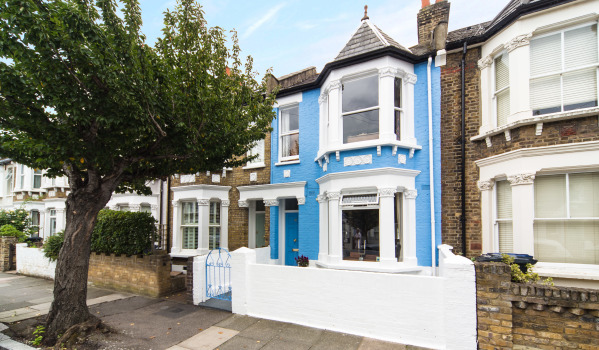
Above: Looking for a three-bedroom Victorian home in the capital? This one is for sale in Acton, West London, for £1m.

Who does it affect?

London, where Barclays says the average property costs just over £480,000, has the biggest number of millionaires at 165,000, closely followed by the south east, where homes cost £320,000, at 130,000.

But the East Midlands and south west actually saw the biggest increase in millionaire population last year, with numbers rising by 11.1% and 10.5% respectively.

There were around 12,500 millionaires in both Wales and Northern Ireland, nearly 9% more than a year earlier.


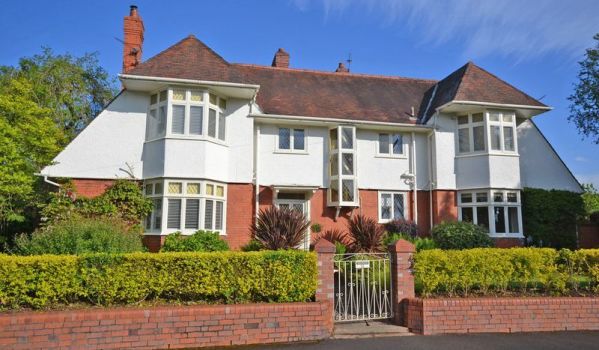
Above: On the market for £950,000 in Newport, Wales, this period home offers five double bedrooms and mature gardens

Sounds interesting. What’s the background?

Barclays Wealth said the UK saw uneven rates of prosperity growth during 2016.

While most areas of the country are more prosperous overall than they were 12 months earlier, cities generally outperformed their regions, leading to gaps opening up in average earnings.

This pattern is reflected in house price growth, with property values in cities typically rising quicker than those in the surrounding region.

Hometrack recently revised its house price growth forecast for the major cities to between 6% and 7% for 2017, significantly higher than the 2% economists have pencilled in for the UK as a whole.

London is the exception, where house price growth remains subdued due to stretched affordability and the uncertainty caused by Brexit.

It should be noted that Barclays’ data is based partly on assets, including property, and not cash alone.

Zoopla currently lists more than 10,000 properties in London costing £1m or more. This compares to 109 in Wales and just 42Scotland. None are currently available in Northern Ireland.

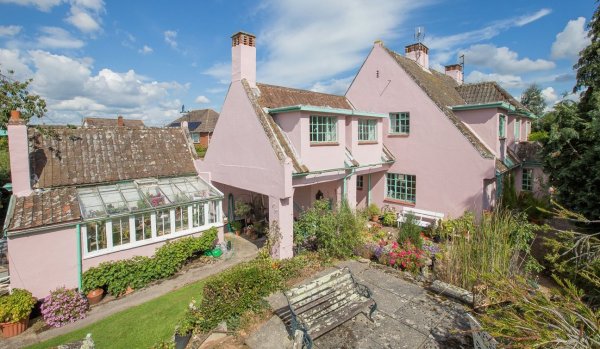
Above: Offering five bedrooms and a detached garage in the estuary village of Lympstone in Devon, this house is for sale £1.1m

Posted on

Strongest house price growth in SW

The latest data and analysis from LSL / Acadata has revealed that the house price gap between the South East and the rest of the country continues to narrow.

According to the findings, house price growth fell marginally in August (0.2%), which left the average England and Wales house price at £297,398. This is still 2.1% higher than this time last year, when the average price was £5,982 lower.

In terms of transactions, there were an estimated 80,500 sales completed – an increase of 5% compared to July’s total, and up 6% on a seasonally adjusted basis.

Annual increases peaked in February 2016 at 9.1%, with both London and the South East boosting the national house price inflation figure by over 2%. With the rate of growth in the regions falling steadily over the year, by February 2017, the national figures were stronger without the two regions included. Today, at 0.7%, London has the lowest house price increases of any region, while other areas such as the East of England (up 5.5%) have continued to rise strongly.

House prices in London fell by an average of 1.4% in July, leaving the average price in the capital at £591,459. Over the year, though, prices are still up by £4,134 or 0.7% compared to July 2016. In July, 21 of the 33 London boroughs saw price falls, however 20 boroughs have increased over the year.

Much of the fall in London’s price in the last month is down to three of the most expensive boroughs: Kensington and Chelsea, the most expensive, where they fell 3.4% to £1,823,659; City of Westminster, second, with prices down 6.8% on the month (and 9.8% on the year, the biggest annual fall) to £1,347,536; and Wandsworth, relatively less expensive, but still in the top ten, with prices at £731,782 after a 3.8% fall.

Just two of the cheapest third of boroughs have seen prices fall in the last year: Greenwich, down 3.9% and Enfield, down 0.9%. By contrast Croydon (up 5.4% annually) and Lewisham (up 6.7%) both saw new peak average prices in the month.

Looking at transactions, sales in the three months May-July 2017 are up 7% on the same period last year.

All regions continued to record annual growth in July, but the East of England is particularly strong. With prices up 5.5% annually, and a 0.3% increase over the month, the region set a new peak average price of £325,616.

Prices in the East of England are still some way off the levels in London, but they’re closing the gap with the South East, where the average price is £369,095, and growth in the last year has been less than half the rate in the East, at 2.5%. Since price growth began to slow in February, the gap between average prices in the two regions has fallen by a fifth from £54,786 to £43,479.

Elsewhere, the divide between high and low priced areas continues to be reinforced, however. With the exception of London and the South East, higher priced areas – the East, South West (up 3.9% annually), East Midlands (up 3.5%) and North West (up 3.9%) – are all seeing stronger annual growth than the cheaper regions of the North East (up 1.2%), Yorks & Humber (up 1.0%) and Wales (up 1.8%).

Overall, 86 unitary authority areas in England and Wales – 80% of the 108 total – have recorded price rises over the year. Those in the best performing region, the East of England, have been consistently strong. Southend-on-Sea (up 11%), Luton (up 9.2%), Bedfordshire (up 9.1%), Peterborough (up 8.6%) and others are growing fast and no authority in the region has seen prices fall for eight months.

Elsewhere, Poole (up 12.9%), Blaenau Gwent (up 12.8%), Pembrokeshire (up 10.3%) and – topping the table (albeit on low transaction volumes) – Rutland, up 16.3%, have also all seen double-digit house price growth in the last year. The biggest fall on an annual basis is in Carmarthenshire, with prices down 7.2% over the year.

When it comes to transactions, Wales is leading the way: eight of the ten top spots in terms of the areas with the highest increase in property sales between the periods of May-July 2016 and May-July 2017 are all located in the country.

Posted on

How to get an offer accepted

Falling in love with your dream home is something most buyers will experience, but there is always a risk that your offer won’t be accepted and you’ll lose out.

NAEA Propertymark shares a few simple tips you can follow to help secure your perfect property.

Katie Griffin, President, NAEA Propertymark says: “Finding your dream property is no mean feat, but when you do eventually find it, the biggest task is keeping hold of it. It’s really important to try and connect with the seller or agents involved, but keep a clear head and make a strong case for why the seller should choose you. An ideal buyer will show that they have done their homework, are clear about how quickly they can move and that they are taking the process seriously.”

Become an expert

Do your homework before you place an offer so you go into the process comfortable and confident. There is so much information available on the internet about the house buying process and the local area, so take advantage of this. Look into what similar properties in the area have sold for so you’re confident the price you’re offering is the right one.

Get your finances in place

Confirm you can get a mortgage and have enough money for a full deposit before you start your search; there’s nothing worse than falling in love with a property you can’t afford. Estate agents will need to verify your ID before solicitors are instructed so remember to bring in your passport and a utility bill to provide your proof of funds. Estate agents shouldn’t accept an offer without confirmation that the prospective buyer has their finances in place.

Stress your position

First-time buyers with no chain make for attractive buyers. Your seller may be looking to move as soon as possible and if you’re in a good position, you should make that clear as it will make you more attractive than other potential buyers.

Build relationships

Building a relationship with your estate agent will help ensure you’re getting the best possible advice about your purchase. Try and go into their offices rather than having a phone call, and sit down with them to discuss your requirements so that later down the line they can put a face to your name.

Act quickly

Sellers are busy and don’t want time wasters. If you like the look of a property, don’t dawdle – be the first to get a viewing. Being proactive is one way to show the seller you’re a serious contender.

Putting a price on it

While a bit of negotiating is to be expected, don’t go too low. This can cause tension with the seller and you may end up losing the property altogether if someone else offers a higher bid. You should try to avoid round numbers to prevent yourself making the same bid as someone else.

Protect your purchase once accepted

Once your offer has been accepted, ask for the property to be taken off the market straight away. This can minimise the chances of additional offers coming in over and above yours and finding you’ve been trumped.

Posted on

UK HPI: House prices up 5.1%

The latest data and analysis from ONS/Land Registry has revealed that average house prices in the UK have increased by 5.1% in the year to July 2017.

The annual growth rate has slowed since mid-2016 but has remained broadly around 5% during 2017.

According to the UK HPI, the average UK house price was £226,000 in July 2017. This is £11,000 higher than in July 2016 and £2,000 higher than last month.

The main contribution to the increase in UK house prices came from England, where house prices increased by 5.4% over the year to July 2017, with the average price in England now £243,000. Wales saw house prices increase by 3.1% over the last 12 months to stand at £151,000. In Scotland, the average price increased by 4.8% over the year to stand at £149,000. The average price in Northern Ireland currently stands at £129,000, an increase of 4.4% over the year to Quarter 2 (Apr to Jun) 2017.