
Posted on

What Will the Homes of 2022 and Beyond Look Like?

In this two-minute read, we look at how new trends could change our homes next year and in the future.

If the past couple of years have taught us anything, it’s that no one really knows what’s going to happen in the future.

But we’ve dusted down our crystal ball (with the help of some Google searches) to discover the trends forecasted to shape the way our homes look, function, and feel.

Below are five trends that style and design experts are predicting will become a hit in our homes next year.

  • Natural colours – We’ll all be going back to our roots – well, kind of. White, ivory, taupe, and grey will be must-have colours, along with the bounce-back of beige. Shades of green are being widely tipped as next year’s number one colour.
  • Flexible spaces – As the pandemic highlighted, rooms in our homes now need to be multi-purpose. Home offices are still on the rise, and with a bit of careful planning, that space in the corner of your living room could be turned into a study/work/play area. This could spell the end for the man cave as it will be under pressure to become a family den.
  • Good for the planet – As climate and sustainability feature more highly in people’s thinking, our thoughts are predicted to apply this mindset to our homes. Long-lasting materials such as stone, glass, onyx, marble, granite, and light wood will become more popular as furniture and features of home decoration. Indoor plants are also forecasted to experience a boom.
  • Built to last – Has fast fashion hit its peak? Because fast furnishings seem doomed to being consigned to the past. Instead, interior design experts are predicting we will start buying better-made, longer-lasting furniture. It’s a bit like choosing a good estate agent to sell your home, it may cost more, but you won’t regret it in the long run.
  • Going to extremes – In keeping with the theme of cutting down consumption, some experts are confident that extreme minimalism will become increasingly popular. The focus will be on functionality – if you haven’t used an item for a while, it’s time to lose it and create more space in your home.

Whatever happens in 2022, we’re confident that the home moving market in South Devon will continue to see a lot of activity and price growth.

How your home looks and feels helps you enjoy its full potential, and that’s something that’ll never go out of fashion.

If you have a property question you need an expert answer to, contact us today.
 

Posted on

The Lowdown on Rent Guarantors

This three-minute read explains the role of rent guarantors.

When a landlord has a niggle of anxiety over whether a prospective tenant will pay their rent, there is a way they can help protect their investment.

A landlord can ask a tenant to provide a guarantor to ‘guarantee the tenancy’.

Guarantors are often family members or close friends – and a little bit like a human safety net.

If the tenant can’t (or won’t) pay what they owe the landlord, the guarantor has to stump up the cash – or face the landlord in court.

Extent of liability

As with so much in the lettings game, it all depends on the terms of the contract.

While some agreements only cover unpaid rent, others will also cover things like damage to the property.

An agreement should clearly state what is covered and outline the circumstances under which the contract will end.

This is important. If the guarantor has a change of heart mid-tenancy, they can’t simply walk away from their commitment. The agreement is legally binding.

When to use a guarantor

It comes down to the landlord’s discretion, but often a guarantor is used when a tenant:

  • Is new to renting.
  • Has gaps in their employment history or has recently started a new job.
  • Is a student.
  • Has a credit rating that is lacking in some way. That doesn’t necessarily mean the tenant has had financial problems; they may be young and have never had a credit card or other loans.

Important points

  • A landlord must check a guarantor’s credit and employment records closely (just as you would with a tenant). Guarantors are often required to own a property and have a gross annual income three times the rent of the rental property they are acting as a guarantor for.
  • Most landlords prefer the guarantor to be UK-based as it’s easier to run credit checks on them and take legal action if required.
  • Issues can occur when people agree to be the sole guarantor on a rent agreement without realising this makes them liable for all outstanding rent and damage costs. For example, a mother agrees to be a guarantor when her daughter moves in with her boyfriend. However, the couple split, the ex-boyfriend disappears, and Mum is livid that she has to cover his payments.
  • Landlords must ensure that a guarantor understands what they’re signing, or they could claim that they were misled or pressured into an agreement.

For more information on any aspect of renting out a property, contact us here at Chamberlains.


Posted on

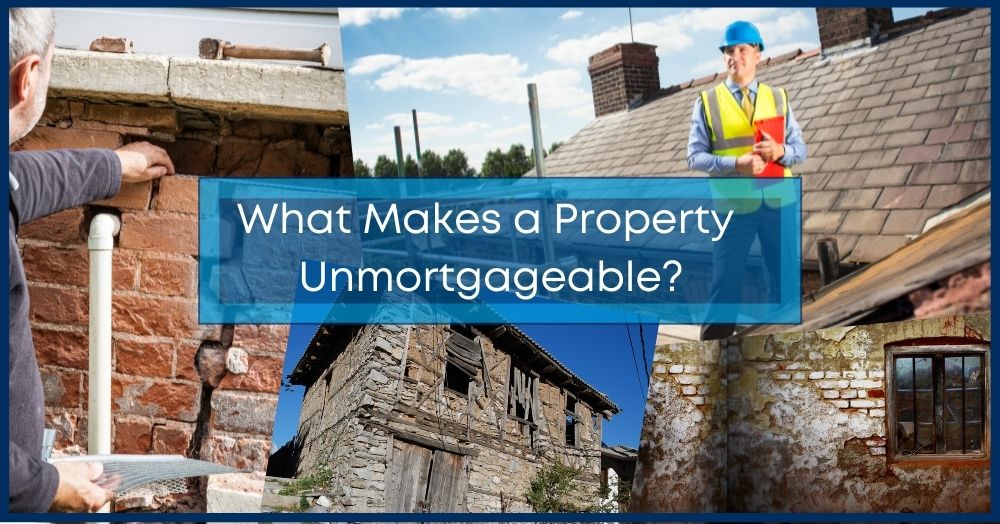
Common Reasons Some Properties Can’t Be Mortgaged

In this two-minute read, we look at reasons why a property may be classified as unmortgageable.

Selling a property can be tricky at the best of times, but when a property is deemed unmortgageable things can get complicated.

‘Unmortgageable’ means lenders won’t allow a potential buyer to borrow the money they need to buy a property. For many sellers, this can be a knockout blow and can significantly reduce their options.

Here are five common reasons why lenders won’t finance a purchase.

  • The property is uninhabitable

This applies to derelict properties, buildings that have been abandoned, that pose safety risks or are considered not weatherproof. In addition, properties without a kitchen or bathroom may also be classed as unmortgageable.

As a buyer, you may have big plans to restore a dilapidated property, but a lender may take a different view. If this is the case, always seek financial advice to learn how else you could finance the purchase.

  • Structural problems

If a property resembles the Leaning Tower of Pisa, chances are it’s got a bad case of subsidence – another big no-no for lenders. Other structural issues affecting whether or not a property is mortgageable include severe damp, dry or wet rot.

  • Short lease

If you spot a flat on the market for well below market value, it may have a short lease (under 70 years). A short lease knocks thousands off the value of a property as a buyer may struggle to get a mortgage (if they can get one at all). They’d also have to pay for a lease extension. This is costly (and can take ages) and there are often restrictions around how long you can own a property before applying for a longer lease.

  • Proximity to commercial or industrial sites

Lots of people live above shops so obviously these properties aren’t unmortgageable, but they aren’t always given regular residential mortgages. Particularly if they are above shops such as dry cleaners or restaurants (where there’s a high risk of fire/smoke damage). Similarly, if you buy near a factory or industrial site, a lender may be more reluctant to provide a mortgage as it may be difficult to sell on.

  • Doesn’t comply with building regulations

Sometimes extensions or building work is carried out without the necessary approval, or doesn’t meet strict building regulations. This can hamper a sale as a lender will need to see the necessary permissions/certificates to provide a mortgage.

Speak to us at Chamberlains to find out how we can help you sell an unmortgageable property.